
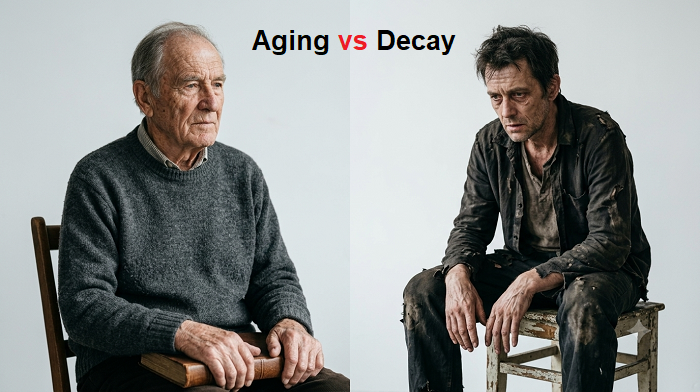
Aging vs. Decay: Why Most “Aging” Is Actually Fixable
Last Updated on 10/08/2026 by DrHelal, MD Medical Doctor with 50+ Years of Clinical Practice • [Read Full Author Bio & Credentials →]
Have you ever looked at an older adult and wondered why some stay sharp, strong, and full of life well into their 70s and 80s, while others seem to slow down, fade, or lose energy decades earlier? We usually blame it all on “getting older” — but what if most of what we think is just part of aging is actually something else entirely?
The truth is that Aging and Decay are not the same thing. Aging is gradual, unavoidable biological decline (gray hair, lesser heart efficiency). Decay is accelerated breakdown caused by inactivity, poor diet, and emotional withdrawal. And here is the most important fact: 70% of what people call aging is actually decay and controllable.
Keep reading to learn know the difference between aging and decay, what causes each, and the easy changes you can make to slow decay and protect your health for years to come.
What Is True Biological Aging?
Aging is the natural, built-in process your body goes through over time, it happens to everyone, no matter how healthy you are. It is slow, steady, and largely unavoidable. It comes from tiny, natural changes in your cells, genes, and systems as the years pass.
Common signs of true aging
These signs start as early as your 30s, but they are so slow that most people do not notice them for decades. They are not caused by anything you do, they are just how the human body works.
- Graying or thinning hair
- Fine lines and wrinkles on skin
- Gradual slowing of heart rate and lung capacity
- Slight decrease in muscle mass and bone density
- Taking a little longer to learn new things or remember small details
What Is Decay: Why It’s Not Inevitable
Decay is different, it is not a natural part of getting older. It is accelerated, unnecessary breakdown of your body and mind, driven by wrong habits and lifestyle. It speeds up aging far faster than nature intended, and it is not “just getting old.”
The biggest causes of Deacy
- Physical inactivity:
Muscles, bones, and organs weaken when they aren’t used regularly - Poor diet:
Too much processed food, sugar, salt, and not enough nutrients damage cells over time - Emotional withdrawal:
Isolation, stress, and lack of purpose wear down your immune system and mental health - Poor sleep and unmanaged stress:
These leave your body no time to repair itself
Common signs of decay: that people wrongly blame on aging
- Rapid loss of strength or mobility
- Constant fatigue and low energy
- Fast weight gain or unexplained weight loss
- Brain fog, forgetfulness, or sharp decline in focus
- Loss of interest in hobbies, friends, or daily life
- Frequent illness or slow recovery from sickness
Aging vs. Decay: Side-by-Side Comparison
| Feature | True Biological Aging | Unnecessary Decay |
|---|---|---|
| Cause | Natural genetic and cellular changes | Lifestyle, habits, and environment |
| Speed | Slow, steady over decades | Fast, can happen in just a few years |
| Avoidable? | No — everyone ages | Yes — fully preventable and reversible |
| Main signs | Gray hair, slower heart rate, fine lines | Weakness, fatigue, isolation, rapid decline |
| Share of “getting older” | ~30% of what we experience | ~70% of what we call “aging” |
| How to slow it | Accept and adapt | Change habits, stay active, stay connected |
How to Stop or Reverse Decay
Since decay is controllable, you can take action at any age to slow it down, stop it, or even turn it around. You don’t need expensive treatments — small, consistent steps work best:
1. Stay Active (Your Body Was Made to Move)
Even gentle movement keeps decay away. Try walking 20–30 minutes a day, light strength training twice a week, stretching, or dancing. Exercise keeps muscles strong, blood flowing, and cells healthy — it is the single most powerful way to fight decay.
2. Feed Your Body Well
Focus on whole foods: vegetables, fruits, lean proteins, whole grains, and healthy fats. Cut back on ultra-processed snacks, sugary drinks, and too much salt. Good food gives your cells the materials they need to repair themselves and avoid breakdown.
3. Stay Connected and Purposeful
Emotional health is just as important as physical health. Spend time with people you care about, keep doing hobbies you love, and find small goals to work toward — whether that’s gardening, learning a skill, or helping others. Loneliness and boredom are major causes of decay.
4. Prioritize Rest and Stress Relief
Aim for 7–8 hours of sleep each night — this is when your body clears waste and fixes damage. Manage stress with deep breathing, quiet time, or doing things that make you laugh. Chronic stress eats away at your body and speeds up decay.
Frequently Asked Questions
1. Is it ever too late to stop decay?
No — never. Studies show that people in their 60s, 70s, 80s, and even older can build strength, improve energy, and feel better just by changing their habits. Decay is reversible at any age.
2. How do I tell if something is aging or decay?
Ask yourself: Is this change happening very slowly, or did it get worse quickly? Is it something most people my age have, or is it unusual? If it came on fast or gets worse every month, it is almost always decay — and you can do something about it.
3. Can medical conditions cause decay-like symptoms?
Yes — some illnesses can feel like decay. Always check with a doctor if you notice sudden changes, so you can rule out health problems before adjusting your habits.
Summary
Aging is different from Decay: aging is the slow, unavoidable natural decline we all go through, while decay is fast, unnecessary breakdown caused by inactivity, poor diet, and disconnection. Most importantly,
70% of what we think is “just aging” is actually decay — and it is fully within your control to slow, stop, or even reverse it. You can’t stop time, but you can protect your strength, energy, and joy for as long as you live.
Trusted Sources
- National Institute on Aging: Lifestyle and Healthy Aging – Genetics and lifestyle choices are factors that influence healthy aging.
- World Health Organization: Decade of Healthy Aging
- Harvard Health: How Lifestyle Affects Aging
🔗 Connect with Helal Medical:
If you suspect that you may have symptoms, Helal Medical can help, offering quick, private, and convenient testing options. You may contact us here: Facebook page, Get Free medical consultation!
This article provides general information. Always consult with a healthcare professional for personalized medical advice.
Discover more from Helal Medical Manila
Subscribe to get the latest posts sent to your email.


