
Autophagy: What It Is, How It Works, and Its Amazing Health Benefits
Last Updated on 10/12/2026 by DrHelal, MD Medical Doctor with 50+ Years of Clinical Practice • [Read Full Author Bio & Credentials →]
Have you ever wished your body had its own built-in cleaning crew to sweep away waste, fix broken parts, and keep your cells running like new? It actually does—and its name is autophagy. It is one of the most vital natural processes inside every human body, yet most people have never heard how it works or why it matters.
Think of it like a recycling program for your cells: it hunts down damaged proteins, worn-out cell parts, and harmful germs, breaks them down, and turns them into raw materials your body can reuse. This process is not just about cleaning, it protects you from illness, slows down aging, and helps you stay strong.
Keep reading to learn exactly how this “self-eating” system works, what triggers it, and simple steps you can take to help it work better for you.
What Is Autophagy?
Think of autophagy as your body’s internal “spring cleaning and recycling program.” Over time, cells collect worn-out components, damaged proteins, toxic waste, and even invading bacteria or viruses. If left to build up, this debris clogs up the cell, slows down its function, and can lead to inflammation, aging, and illness.
Autophagy solves this problem: it identifies and removes the damaged or unnecessary parts, breaks them down into basic building blocks, and reuses those materials to create new, healthy cell structures. It is not a destructive process—it is a regenerative one.
I used to advise my patients to trigger this process, how to do this? I explain in the following paragraphs. Keep reading to lean one of the most important processes!
Key Mechanisms of Cellular Renewal
Quality Control:
Regular autophagy prevents the toxic accumulation of aggregates linked to cellular aging and dysfunction.
Debris Clearance:
Damaged proteins and worn-out organelles are targeted, enveloped, and systematically broken down.
Nutrient Recycling:
The resulting molecular building blocks are salvaged to construct new cellular structures or supply immediate energy during metabolic stress.
Every cell in your body produces waste and is damaged over time. Just like a house collects broken items, and clutter, cells build up old proteins, malfunctioning energy centers, and even bits of invading bacteria or viruses. If left to pile up, this clutter would make cells stop working, speed up aging, and raise your risk of serious diseases. Autophagy steps in to clear this mess before it causes problems.
Scientists first identified this process in the 1960s, but it only got the attention it deserved in 2016, when researcher Yoshinori Ohsumi won the Nobel Prize for uncovering exactly how it operates. Today we know that it is one of your body’s most powerful defenses against sickness.
How Does Autophagy Work? Step-by-Step
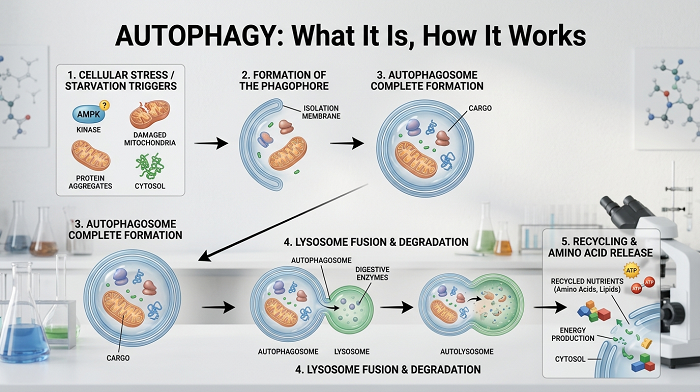
Autophagy is a highly organized process that follows a clear sequence inside every cell. It runs at a low level all the time, but speeds up significantly when the body needs extra repair or energy. Here is how it happens:
1. The Trigger Signal
Autophagy begins when the cell receives a signal that it needs to conserve energy or remove waste. This often happens when nutrients are limited, such as during fasting, or when the cell is under mild stress from exercise or lack of food. The main switch that starts this process is a protein called AMPK, which activates when energy levels drop.
2. Formation of the Autophagosome
Next, the cell builds a thin, double-layered membrane that grows and wraps around the unwanted material—whether it is a damaged organelle, clumped protein, or harmful substance. This enclosed sac is called an autophagosome. It acts like a sealed bag that isolates the waste so it does not spread damage to other parts of the cell.
3. Fusion and Breakdown
The autophagosome travels through the cell and merges with another structure called a lysosome—a small organelle filled with powerful digestive enzymes and acids. Once joined, the contents inside are broken down into their simplest forms: amino acids, fatty acids, sugars, and vitamins.
4. Recycling and Reuse
The broken-down materials are then released back into the cell. Instead of being thrown away, they are used as raw materials to build new proteins, create energy, and repair healthy parts of the cell. Nothing goes to waste—this is why autophagy is called a “recycling system.”
Top Health Benefits of Autophagy
Supporting autophagy means supporting almost every part of your body. Here are its biggest advantages:
Fights Aging and Cellular Damage
Clogged, damaged cells are one of the main reasons we age. By clearing out this clutter regularly, autophagy keeps cells functioning well longer, which may help slow signs of aging like wrinkles, weaker muscles, and slower thinking.
Protects Against Chronic Disease
Buildup of cellular waste is linked to many serious conditions, including Alzheimer’s, Parkinson’s, type 2 diabetes, and heart disease. Strong autophagy lowers this risk by removing the faulty material that causes these illnesses to develop.
Boosts Immunity
Autophagy finds and destroys invading germs like bacteria and viruses inside cells. It also helps your immune system recognize threats more quickly, so you fight off colds, flu, and infections faster.
Supports Weight Management and Metabolism
When autophagy is active, it burns stored fat for energy and improves how your body uses insulin. This can make it easier to maintain a healthy weight and avoid blood sugar spikes.
Helps Repair Tissues and Muscles
After exercise or injury, autophagy clears damaged muscle cells and supplies the building blocks needed to grow stronger, healthier tissue.
Simple Ways to Boost Autophagy Naturally
You don’t need special supplements or expensive treatments to get عملية الالتهام الذاتي لخلايا الجسم working better—small lifestyle changes make the biggest difference:
- Try intermittent fasting: Short breaks from eating (such as 12–16 hours overnight) are one of the most proven ways to trigger autophagy.
- Exercise regularly: Moderate workouts like walking, jogging, or strength training tell your cells to start cleaning up.
- Eat nutrient-rich whole foods: Fill your plate with leafy greens, nuts, berries, and healthy fats like olive oil. Limit processed foods and added sugars, which slow down the process.
- Get enough sleep: Autophagy works hardest while you rest—aim for 7–9 hours of quality sleep each night.
- Manage stress: Chronic stress disrupts autophagy. Try deep breathing, meditation, or time outdoors to keep your body balanced.
Quick Key Facts
| Topic | Key Details |
|---|---|
| Name | Autophagy (عملية الالتهام الذاتي لخلايا الجسم) |
| Core purpose | Clean, repair, and recycle damaged cell material |
| Best triggers | Intermittent fasting, exercise, sleep |
| Main benefits | Anti-aging, disease protection, immunity boost |
| When it slows | Poor diet, lack of sleep, long-term stress |
Frequently Asked Questions
1. Is autophagy safe for everyone?
Yes—it is a natural process your body does on its own. If you try fasting to boost it, start slowly, and check with your doctor first if you are pregnant, breastfeeding, have diabetes, or take regular medication.
2. How long does it take for autophagy to start?
It depends on your body, but it typically speeds up about 12–16 hours after your last meal. It stays active as long as your body needs to use stored energy.
3. Can supplements replace lifestyle changes?
No. Some supplements may support autophagy slightly, but they cannot replace the consistent benefits of good sleep, regular movement, and a balanced diet.
Summary
Autophagy is your body’s natural, built-in maintenance system that cleans, repairs, and recycles cells. It protects against disease, slows aging, supports immunity, and keeps your energy levels steady.
It runs automatically every day, but you can make it more effective by choosing simple habits like gentle fasting, regular exercise, whole foods, and good rest. Supporting this process is one of the easiest ways to care for your health for years to come.
Trusted Sources
- National Institute on Aging: What Is Autophagy?
- Nobel Prize 2016: The Mechanism of Autophagy
- Harvard Health Publishing: Autophagy and Health
Connect with Helal Medical:
If you suspect that you may have symptoms, Helal Medical can help, offering quick, private, and convenient testing options. You may contact us here: Facebook page, Get Free medical consultation!
This article provides general information. Always consult with a healthcare professional for personalized medical advice.
Read More:
How Intermittent Fasting Affects the Liver: Step by Step
Healthy Lifestyle for Men: Effective Tips for Wellness
Discover more from Helal Medical Manila
Subscribe to get the latest posts sent to your email.


