
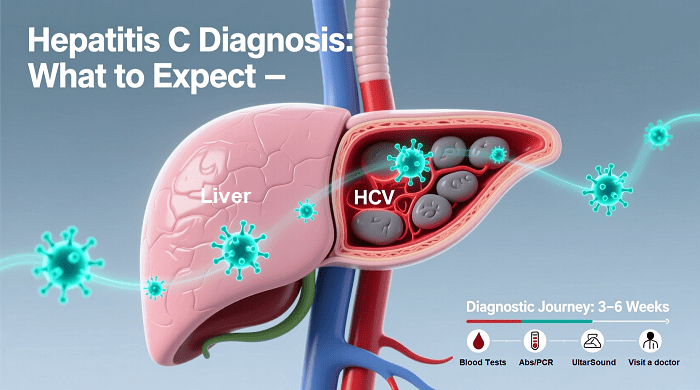
Hepatitis C Diagnosis: What to Expect
Last Updated on 06/12/2026 by DrHelal, MD Medical Doctor with 50+ Years of Clinical Practice • [Read Full Author Bio & Credentials →]
A diagnosis of Hepatitis C Virus can be daunting. However, understanding the process helps. Knowing what to expect reduces anxiety. Early diagnosis is crucial for effective treatment. We’ll walk through each step.
This article aims to clarify the diagnostic journey from initial screening to confirmation and genotyping and why this is important. Continue reading to be informed about your health.
Why Is Diagnosis Important?
Hepatitis C often shows no symptoms. It can cause liver damage silently. Undiagnosed, it leads to cirrhosis or cancer. Early detection allows for timely intervention. It prevents further progression of the disease. Diagnosis is the first step towards a cure. It safeguards your long-term liver health.
First Screening: The Antibody Test
The first step is typically an antibody test. This blood test checks for HCV antibodies. Antibodies indicate past or present exposure. A positive result means you’ve encountered the virus. It does not confirm an active infection. Further testing is needed to differentiate. This test is often part of routine screenings. Visit the World Health Organization for more information on global screening efforts.
Confirming Active Infection: RNA PCR Test
If your antibody test is positive, an RNA PCR test follows. This test directly detects the virus’s genetic material. A positive PCR test confirms active infection. This means the virus is currently replicating. It’s crucial for treatment planning. The viral load, or amount of virus, is also measured. This helps assess disease activity.
Genotyping: Identifying the Strain
Hepatitis C has different genotypes. Genotyping identifies the specific strain. There are six major genotypes worldwide. Genotype 1 is the most common. Knowing the genotype is vital for treatment. Different genotypes respond differently to medications. Your doctor will use this information. It helps tailor the most effective therapy.
Liver Assessment: FibroScan and Biopsy
After confirmation, liver assessment is common. This determines the extent of liver damage. A FibroScan is a non-invasive procedure. It measures liver stiffness, indicating fibrosis. In some cases, a liver biopsy might be performed. This provides a tissue sample for examination. These assessments guide treatment decisions. They also help monitor disease progression.
What Happens After Diagnosis?
Once diagnosed, your doctor will discuss options. Treatment for Hepatitis C Virus is highly effective. Direct-acting antiviral (DAA) drugs are standard. These medicines offer high cure rates. They work by targeting the virus directly. You will be monitored throughout treatment. Regular follow-ups ensure success. Your healthcare team will support you.
Conclusion
Navigating a Hepatitis C Virus diagnosis is a process. From antibody tests to genotyping, each step is vital. Understanding these stages empowers you. It ensures you receive appropriate care. Early and accurate diagnosis leads to better outcomes.
🔗 Connect with Helal Medical:
If you suspect that you may have symptoms, Helal Medical can help, offering quick, private, and convenient testing options. You may contact us here: Facebook page, Get Free medical consultation!
This article provides general information. Always consult with a healthcare professional for personalized medical advice.
Discover more from Helal Medical Manila
Subscribe to get the latest posts sent to your email.


