
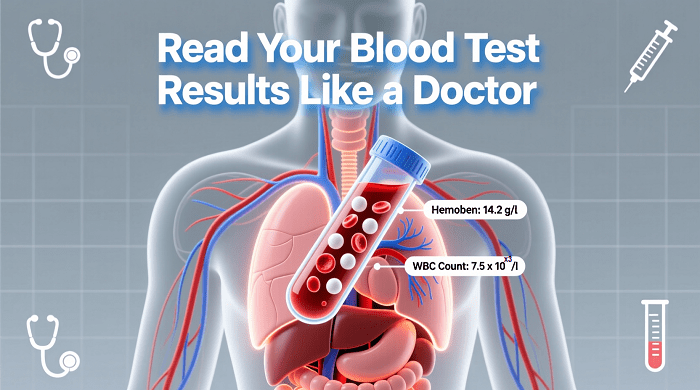
How to Read Your Blood Test Results Like a Doctor
Last Updated on 08/03/2026 by DrHelal, MD Medical Doctor with 50+ Years of Clinical Practice • [Read Full Author Bio & Credentials →]
When you get your blood test report, the mix of numbers, abbreviations, and reference ranges can seem confusing. But understanding these test results helps you take a more active role in your health. Let’s simplify the most common blood tests.
In this article, we will explain what each of them means and teach you how to R\read your blood test results. This will help you interpret them like a doctor:
The Most Common Laboratory Blood Tests include Complete Blood Count (CBC), Blood Sugar, Lipid Panel, Kidney & Liver Function, Thyroid functions and Electrolytes.
1. Complete Blood Count (CBC)
A CBC provides essential information about your blood cells.
- Hemoglobin (Hb): Measures oxygen-carrying capacity.
- Low levels → anemia, blood loss, or nutritional deficiency.
- High levels → dehydration or polycythemia.
- White Blood Cells (WBC): Reflect your immune status.
- High WBC → infection or inflammation.
- Low WBC → viral infection or bone marrow suppression.
- Platelets: Help with clotting.
- Low platelets → risk of bleeding.
- High platelets → inflammation or bone marrow disorder.
🩸 Tip: Always compare results to your lab’s reference range — small differences are often normal.
2. Blood Sugar (Glucose Test)
Glucose is your body’s main source of energy.
- Normal fasting glucose: 70–99 mg/dL
- Prediabetes: 100–125 mg/dL
- Diabetes: ≥126 mg/dL on two separate tests
🩸 HbA1c Test: Shows your average blood sugar level over 3 months.
- Goal: Keep below 5.7% for non-diabetics, and below 7% for diabetics (individual goals vary).
3. Lipid Profile (Cholesterol Test)
Your lipid panel measures fats in your blood:
- Total cholesterol: <200 mg/dL
- LDL (“bad” cholesterol): <100 mg/dL
- HDL (“good” cholesterol): >40 mg/dL (men), >50 mg/dL (women)
- Triglycerides: <150 mg/dL
High LDL and triglycerides increase the risk of heart disease and stroke, while high HDL protects your heart.
🩺 Tip: Healthy diet, exercise, and weight management can dramatically improve these numbers.
4. Kidney Function Tests
Two main tests show how well your kidneys are working:
- Creatinine and Blood Urea Nitrogen (BUN)
- High levels may indicate kidney disease, dehydration, or certain medications.
- Estimated GFR (eGFR): Normal is >60 mL/min/1.73m²
- Lower numbers mean reduced kidney function.
5. Liver Function Tests
These tests help assess liver health:
- ALT and AST: High levels indicate liver inflammation or damage.
- Bilirubin: Elevated levels cause yellowing of the skin (jaundice).
- Albumin: Low levels suggest chronic liver or nutritional issues.
🩺 Tip: Avoid alcohol and unnecessary medications that stress the liver.
6. Thyroid Functions Tests
Your thyroid controls metabolism and energy levels.
- TSH (Thyroid-Stimulating Hormone):
- High TSH → underactive thyroid (hypothyroidism).
- Low TSH → overactive thyroid (hyperthyroidism).
- T3 and T4: Measure thyroid hormone levels.
Symptoms like fatigue, weight change, or mood swings often relate to thyroid imbalance.
7. Electrolyte Panel
Electrolytes (sodium, potassium, chloride, bicarbonate) keep your body’s fluids and nerves balanced.
- Sodium (Na): 135–145 mmol/L
- Potassium (K): 3.5–5.0 mmol/L
- Abnormal levels can cause fatigue, confusion, or heart rhythm changes.
Summary
Understanding your blood test results empowers you to take charge of your health.
Regular blood tests reveal early signs of disease — often before symptoms start. Discuss any abnormal results with your doctor to find out the cause and the best next steps.
Remember, lab values must always be interpreted in the context of your overall health, medications, and symptoms.
External Links
- NIH – Understanding Laboratory Tests
- Cleveland Clinic – Blood Test Results Explained
- Mayo Clinic – Comprehensive Metabolic Panel
🔗 Connect with Helal Medical:
If you suspect that you may have symptoms, Helal Medical can help, offering quick, private, and convenient testing options. You may contact us here: Facebook page, Get Free medical consultation!
This article provides general information. Always consult with a healthcare professional for personalized medical advice.
Discover more from Helal Medical Manila
Subscribe to get the latest posts sent to your email.


